On this page
- 1. Start with real material cost per candle
- 2. Add your hours at a real hourly rate
- 3. Account for overhead you forget
- 4. Know what Etsy UK really takes (2026 fees)
- 5. Apply a markup that leaves you a real margin
- 6. Price a gift set (worked example continued)
- 7. Keep the numbers current
- FAQ
- Seven steps, one number that keeps moving
If you've ever stared at a finished candle wondering whether £18 is too much, too little, or a number you just made up, you're not alone. Most UK makers I talk to are underpricing, and the ones who've raised prices rarely get the pushback they feared.
And if you haven't poured your first sellable candle yet, pricing is the thing to work out before you spend £150 on wax, jars, and fragrance oil. Not after. Otherwise you've either picked a number and hoped, or you're about to.
What follows is the pricing stack for an 8oz soy candle sold on Etsy UK, worked end to end with real 2026 numbers. Adjust for your setup. The structure stays the same.
TL;DR: Material cost + labour at a real hourly rate + a share of overhead + platform fees (Etsy UK takes about £3.30 on an £18 candle in 2026), then a markup that lands you at a 50–60% retail margin or 100%+ wholesale. Worked example: 8oz soy at £18 leaves £5.28 profit. 29.3% margin. Probably £4 too cheap.
1. Start with real material cost per candle
Material cost is the one line most UK candle makers get wrong. Usually because they estimate fragrance oil by the bottle instead of per millilitre, which is where a third of the error hides. For an 8oz soy candle at a 10% fragrance load (the proportion of fragrance oil to wax, by weight), typical UK material cost in 2026 is £6.50–£7.00 per candle before any labour, packaging, or fees.
Weigh the real thing. Wax, fragrance oil, wick, jar, label, warning sticker. For an 8oz soy candle at 10% fragrance load:
- Soy wax (200g at £8.50/kg) — £1.70
- Fragrance oil (15ml at £0.18/ml) — £2.70
- CD-10 wick — £0.35
- 8oz amber jar — £1.85
- Candle label — £0.12
- Warning label — £0.04
Material total: £6.76 per candle.
Where to source UK candle materials
The UK maker supply chain is well served, but the prices on a supplier's homepage aren't the ones you'll get at batch-buy volumes. Verify before you plug anything into your spreadsheet. Most suppliers update pricing quarterly.
- Wax — Candle Shack (Glasgow), Kerax, The Wax Company, 4Candles. Soy ranges roughly £8–9/kg in 1kg pouches and drops to £5–6/kg at 20kg+.
- Fragrance oil — Mystic Moments, NI Candle Supplies, Aromantic, The Soap Kitchen. Watch the per-ml price, not the per-bottle one. A 100ml bottle at £5.50 is £0.055/ml; a 1L bottle of the same oil at £32 is £0.032/ml. That's a 42% per-ml saving at the cost of about £27 upfront.
- Wicks — CD, HTP, and wooden-wick series from Candle Shack or Supplies for Candles. These are the cheapest line in the stack: £0.30–£0.45 each at retail, about half that in 500-packs.
- Jars — Supplies for Candles, 4Candles, Ampulla. Case-of-96 pricing is typically 35–45% cheaper per jar than case-of-12.
- Labels — OnlineLabels UK or a local digital printer. Avoid inkjet home-printing anything that touches a warm jar. The ink smudges the first time a customer picks it up.
No affiliate links, no rankings. These are the suppliers the makers I speak to actually use.
Bulk vs trickle buying: the pricing trade-off
Your material cost line changes depending on how you source, and that directly moves your retail price. A maker buying 1kg wax pouches pays about £8.50/kg. A maker buying 20kg slabs pays about £5/kg. That's £0.70 per 200g candle. Bigger than the wick line.
The catch: bulk ties up cash. £100+ on wax alone, £30+ on fragrance. It only pays back if you actually pour it, and soy wax stores for about 12–18 months cool and dry before scent throw starts to fade.
If you haven't validated a scent yet, don't buy 20kg of it. Sell through two paying customers on 1kg pouches first. Then bulk.
Just starting out? Use the supplier list prices above and assume about 10% wastage on your first few batches: failed pours, spilled wax, wick mis-measures. Your real material cost will land within 10p of the worked example above. Enough to price-test a listing with.
2. Add your hours at a real hourly rate
Labour is a cost, not a gift. If you pour 12 candles an hour and pay yourself £15/hour, that's £1.25 per candle. Add setup and cleanup (say another 30 minutes on a batch of 24) and true labour climbs to £1.88. Pour-rate labour undercounts by about a third.
Why £15/hour? The UK National Living Wage is £12.21 from April 2025. If you're paying yourself minimum wage to run your own business, that's not a business. It's a job you invented for yourself. £15 is a floor, not a ceiling.
| Labour measure | Hourly rate | Per candle (24-batch) |
|---|---|---|
| Pour-only (12/hr) | £15 | £1.25 |
| Batch-true (incl. 30 min setup) | £15 | £1.88 |
Cost so far: £8.64 per candle.
Just starting out? If you haven't timed a batch yet, assume 8 candles/hour on your first few runs, not 12. Beginners are slower. Use £15/hr as a placeholder and adjust once you've done a real 24-candle pour. Pricing yourself at minimum wage from day one is the mistake you'll regret first.
3. Account for overhead you forget
Overhead is the bucket of costs that don't sit on any single candle but still have to be paid. Electricity for melting. Wax spillage. Failed pours. Packaging tape. Delivery of supplies. Public liability if you do fairs. Most maker pricing guides ignore it entirely. A rough UK rule is 10–15% of material cost, which on our 8oz candle adds about £0.80 per unit.
On a year's production of 500 candles at an average material cost of £6.76, that's £338–£507 of overhead you'll pay whether you price for it or not.
Line items worth thinking about:
- Utilities — small, but non-zero if you're melting 5kg+ a week
- Failed pours and wick mis-picks — budget 3–5 per 100 on learning batches
- Reorder shipping — supplier delivery fees eat into anything under a £40 basket
- Public liability insurance for fairs — roughly £60/year through a broker
- Small tools and replacements — thermometers, pouring pitchers, the kitchen scale that finally dies
Cost so far: £9.44 per candle.
Just starting out? Your first 50 candles will include at least 3 failed pours. Cracked jars, sunken tops, mis-weighed fragrance. Budget 15% overhead on the first 100 candles and drop to 10% once your process is dialled in. Don't price as if every pour is perfect from the start, because it won't be.
4. Know what Etsy UK really takes (2026 fees)
Etsy UK takes more than you think. On a £22 order (£18 candle + £4 shipping), the fee stack lands at about £3.28, roughly 18%.
The breakdown on an £18 listing with £4 shipping:
- Listing fee — £0.16
- Transaction fee (6.5% of £22) — £1.43
- Payment processing (4% + £0.20 on £22) — £1.08
- Regulatory operating fee (0.25% of £22) — £0.06
- VAT on those fees (20%, charged on the Etsy fees above) — £0.55
Etsy total fees on an £18 candle: about £3.28.
That last line is Etsy charging 20% VAT on the fees they charge you. It lands on every UK seller regardless of whether you're VAT-registered yourself. Most solo makers aren't.
Etsy has adjusted fees twice in the last 12 months. Verify the live numbers at etsy.com/uk/legal/fees before you set a price.
Cost so far: £12.72 per candle.
Shopify and Not On The High Street stack their fees differently. Shopify charges a flat monthly plus a per-transaction rate; Not On The High Street takes a larger commission but handles VAT differently. Those are separate posts. For now the point is: whichever platform you sell on, the fee line goes inside your cost stack, not on top of your margin.
5. Apply a markup that leaves you a real margin
For handmade candles in the UK, target a 50–60% retail margin and a 100%+ wholesale markup. That's the number the craft-business guides agree on, and it's the one most new makers undershoot by instinct.
Quick definitions, because they aren't the same:
- Margin is profit as a percentage of selling price. £5.28 profit on an £18 candle is a 29.3% margin.
- Markup is profit as a percentage of cost. £5.28 profit on £12.72 cost is a 41.5% markup.
On our example (£12.72 total cost after fees), a 50% retail margin means pricing at £25.44. Not the £18 most makers pick. That's where the business quietly dies.
Three honest options:
- Raise the price to £22–£25. Margin moves to 42–49%. Customers rarely flinch. "£22 isn't scary" is the boring truth of most Etsy candle pricing.
- Cut material cost. Bulk soy wax is often 20–40% cheaper per kg. That's roughly £0.70 per candle back in your pocket.
- Accept the lower margin if the candle is a gateway product, a cheap scent-sampler that gets customers into your higher-margin range.
Just starting out? The biggest mistake new candle makers make is pricing their first listings cheap to "get reviews." It doesn't work. Etsy's algorithm rewards sales velocity and conversion, not low prices. Once the listing converts at £9, it's trapped there. Start at your margin-respecting number. If sales don't come in 90 days, the lever to pull is photos, scent range, or niche. Not price.
6. Price a gift set (worked example continued)
Bundles change the maths. Three candles sold as a gift set at £48 (not £54) bring the per-candle price down to £16, but the fee burden per unit drops and the average order rises.
- Materials (3 × £6.76): £20.28
- Labour (less setup per candle on a 3-pack): £5.63
- Overhead (3 × £0.80): £2.40
- Shipping box + padding: £2.10
- Etsy fees on £52 (with £4 shipping): £7.96
- Total costs: £38.37
- Profit: £9.63, 20.1% margin.
Lower percentage than singles. Higher cash per customer. Whether it's worth running depends on what you're chasing. Repeat buyers and average order value: bundles work. Margin per unit: they don't.
7. Keep the numbers current
The formula is the easy part. Keeping it accurate when soy wax moves 12% in a quarter, Etsy changes fees mid-year, and your labour rate goes up annually is where spreadsheets quietly rot. The makers who raise prices reliably are the ones whose costs auto-update.
Wax prices move. Fragrance oil prices move. Etsy's fees have changed twice in the last 12 months. Your labour rate should go up every year. If your pricing lives in one spreadsheet that gets updated when you remember to, it's already out of date.
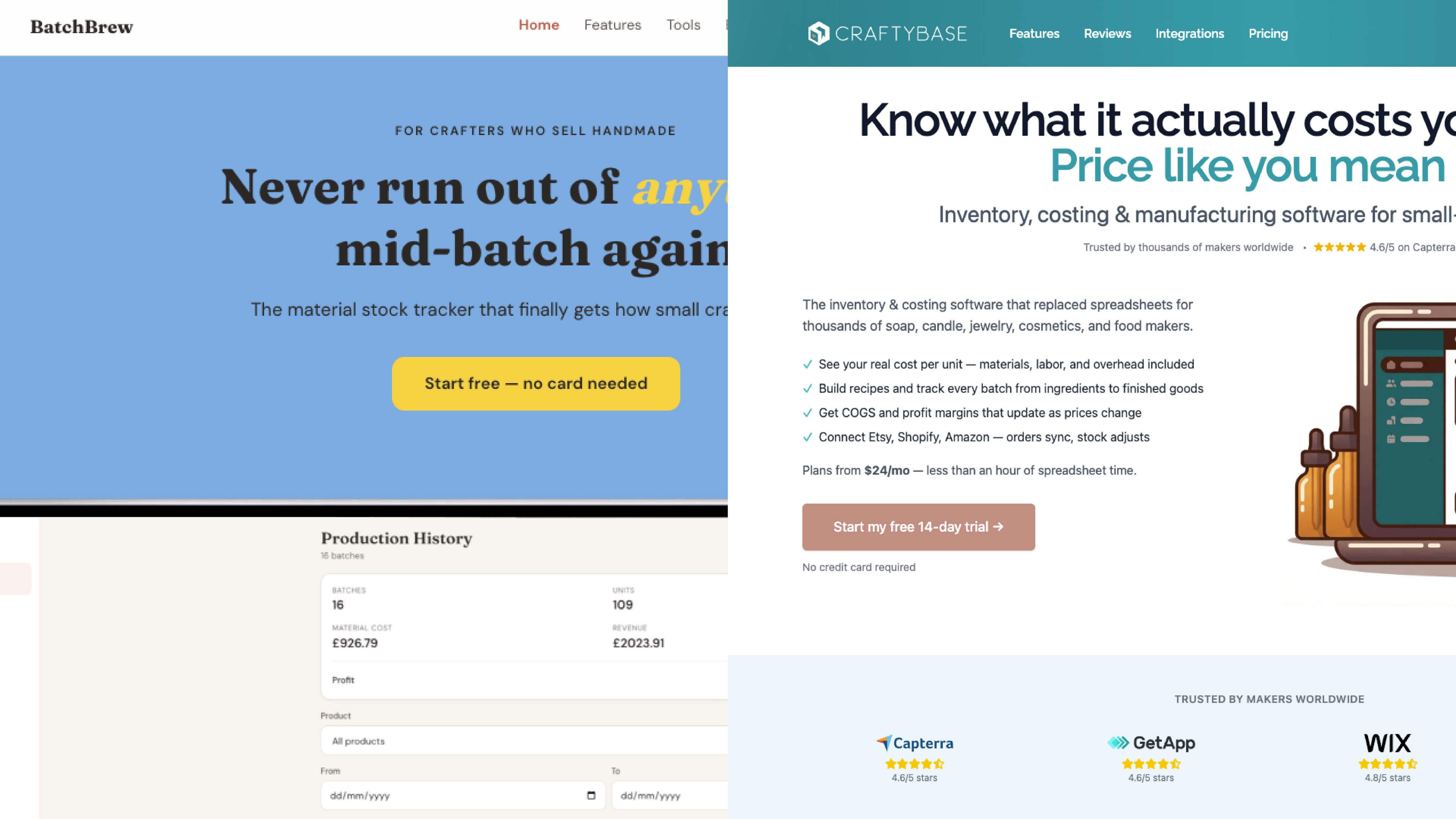
That's the whole reason I built BatchBrew. Every batch you log recalculates your real cost, fees, and margin live. No spreadsheet maintenance, no stale numbers. There's more UK maker pricing guides in the same vein, or a bit on what we're about if you want the back story.
FAQ
How much does it cost to make a soy candle in the UK in 2026?
About £6.50–£7.00 in material cost for an 8oz soy candle at a 10% fragrance load, before labour, overhead, or platform fees. Add labour, overhead, and Etsy UK fees and the true landed cost on an £18 listing is around £12.70. Supplier list prices from Supplies for Candles and NI Candle Supplies support those numbers at typical 2026 rates.
I'm just starting out, should I price my first candles lower to attract buyers?
No. Low starter pricing doesn't win reviews on Etsy UK. It trains the algorithm that your listing converts at a low price point and traps you there. Price at your real margin from the first listing. If sales don't come in 90 days, the lever to pull is photos, scent range, or niche. Not price.
How do I price different candle sizes (4oz, 8oz, 12oz)?
Don't scale by weight. A 4oz candle uses roughly half the wax and fragrance of an 8oz, but the same wick, label, and labour. Cost lands around 65–70% of the 8oz, not 50%. Run each size through the same seven-step stack. Assuming a linear jar-to-price ratio is how small candles end up loss-leaders.
Should I buy candle materials in bulk when I'm starting out?
Not before you've validated the scent and jar combo with at least two paying customers. A 20kg wax slab at £5/kg saves about £70 over the same weight in 1kg pouches, but only if you actually pour it. Soy wax has a 12–18 month shelf life. Throwing out 18kg of a scent nobody buys is a worse outcome than paying 30% more on pouches.
Should I match my competitors' Etsy prices on candles?
No. Price-matching on Etsy UK is a race to the bottom, because most listings you're benchmarking against are underpriced on the same hidden cost gaps this post flags: forgotten overhead, pour-only labour, under-counted fees. Use competitor prices as a sanity check on the ceiling, not the floor.
What markup should I use for wholesale candles in the UK?
100% markup (2× cost) is the entry-level handmade wholesale convention, with a 50% retail margin layered on top. Some UK makers use 2.2–2.5× to protect against later fee changes. Under 100% markup on wholesale and you're making the retailer's margin for them.
Seven steps, one number that keeps moving
- Real material cost. Weigh it, don't guess it.
- Labour at a real hourly rate, including setup.
- Overhead at 10–15% of material cost.
- Etsy UK fees (or whatever platform) go inside your cost stack, not on top.
- Markup to a 50–60% retail margin.
- Gift sets for volume, not for margin-per-unit.
- Keep the numbers current, because they drift.
If £18 felt too high, it was too low.
Start pricing in BatchBrew — free
Free for up to 15 materials. No credit card. Maker plan is £10/month when you're ready.
Start free